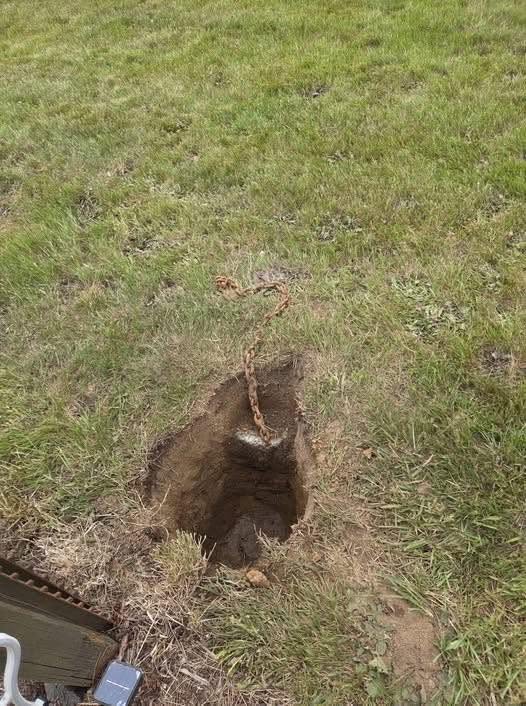
Recently, I replaced our battered mailbox. It had weathered decades of storms, snowplows, and the occasional wayward deer. As I began scraping around the old post to remove it, my shovel struck something solid.
Clang.
I knelt down, brushed away the dirt, and uncovered it: a thick, rusted chain, buried about eight inches below the surface.
My first thought? Buried treasure.
My second thought? What the hell is this thing attached to?
I dug a little deeper. The chain wasn’t random. It was clipped to a metal anchor, coated in cement below ground, and connected to the bottom of the mailbox post. It wasn’t decoration. It wasn’t an accident.
It was a defense system.
📬 Rural Mailbox 101: What’s an Anchor, and Why Does It Exist?
That chain was part of what rural homeowners quietly call a mailbox anchor—a simple but clever bit of engineering designed to protect one of the most vulnerable fixtures on a country road.
How It Works:
Component
Purpose
Metal anchor plate
Buried underground, coated in concrete for stability
Heavy-duty chain
Connects anchor to the base of the mailbox post
Reinforced post
Often steel pipe or concrete-filled wood, not just standard lumber
Strategic placement
Positioned to absorb impact without toppling
Why It Exists:
✅ Mailbox vandalism is real: In rural areas, mailboxes are easy targets for pranksters, bored teens, or drivers looking for a cheap thrill
✅ Insurance doesn’t always cover it: Repeated damage adds up, and not all policies cover “acts of mischief”
✅ Remote locations mean slow response: Police may be miles away; prevention is better than reaction
✅ Pride of place matters: A mailbox is often the first thing visitors see; protecting it is about dignity, not just function
💡 Key insight: This isn’t about aggression. It’s about deterrence. The goal isn’t to hurt anyone—it’s to make vandalism so inconvenient that people think twice.
🚛 The Problem: Why Mailboxes Get Targeted
If you’ve never lived rurally, you might not realize how common mailbox destruction can be.
Common Scenarios:Common Scenarios:
Scenario
Why It Happens
“Mailbox baseball”
Teens or young adults use mailboxes as targets for bats, rocks, or vehicles
Snowplow collisions
Winter equipment can accidentally (or intentionally) knock over unmarked posts
Drunk driving incidents
Impaired drivers veer off rural roads and hit roadside fixtures
Prank culture
What starts as a joke can escalate into property damage
Road rage or disputes
Mailboxes become collateral in neighborhood conflicts
The Cost of Vandalism:
Financial: Replacing a mailbox post, box, and flag can cost $50–$200+; repeated damage adds up quickly
Emotional: Mail is personal; having it scattered or destroyed feels like a violation
Practical: Missing bills, prescriptions, or important documents creates real-life consequences
Community impact: When mailboxes vanish overnight, it erodes trust and safety in rural neighborhoods
🌾 Rural reality: In towns where the nearest neighbor is a quarter-mile away and police response can take 30+ minutes, self-reliance isn’t just a value—it’s a necessity.
⚙️ The Solution: Creative, Low-Tech Deterrence
Faced with repeated vandalism, rural homeowners didn’t wait for legislation or law enforcement. They got creative.
Common Rural Mailbox Defenses:
Method
How It Works
Effectiveness
Concrete-filled posts
Standard wooden post filled with concrete; much harder to snap
High—requires significant force to break
Steel pipe posts
Replaces wood with galvanized steel pipe; resists impact
Very high—can dent vehicle bumpers
Buried anchor + chain
Chain absorbs impact, transfers force to ground anchor
High—prevents post from toppling; may damage aggressor’s vehicle
Rebar spikes or collars
Metal spikes welded around post base; deters close approach
Moderate—visual deterrent; may cause tire or bumper damage
Reflective markers + lighting
Makes mailbox highly visible at night; reduces accidental hits
Moderate—prevents accidents, not intentional vandalism
Security cameras
Records incidents; aids in identification and prosecution
Variable—requires power, signal, and monitoring
🔧 DIY tip: Many rural hardware stores sell “mailbox anchor kits” specifically designed for this purpose. They’re affordable, easy to install, and effective without being dangerous.
⚖️ The Legal Line: Deterrence vs. Danger
Here’s where things get nuanced.
What’s Generally Legal:
✅ Reinforcing your own property: You can strengthen your mailbox post to withstand impact
✅ Passive deterrents: Anchors, reflective tape, lighting, and cameras are typically permissible
✅ Warning signs: “Mailbox protected by anchor” or “Video surveillance” signs are legal and effective
What’s Generally Not Legal:
❌ Intentional traps: Devices designed to injure people (spikes that puncture tires, electrified posts, etc.)
❌ Excessive force: Anchors designed to flip vehicles or cause serious injury could lead to liability
❌ Misrepresentation: Claiming a device is for “safety” when its primary purpose is retaliation
⚠️ Important: Laws vary by state and municipality. Before installing any deterrent, check local ordinances or consult a legal professional. The goal is protection—not escalation.
🔍 My Discovery: What That Chain Taught Me
When I found that rusted chain under my mailbox, I felt a mix of emotions:
Curiosity: Who installed this? When? Why?
Respect: Whoever lived here before meant business. They didn’t complain. They didn’t wait. They solved a problem.
Amusement: There’s something darkly funny about rural ingenuity—a quiet “you hit my mailbox, you deal with the consequences” energy.
Nostalgia: It reminded me of growing up in a place where people fixed things themselves, protected what mattered, and didn’t apologize for it.
I tugged on the chain. It didn’t budge. Cemented solid. No clue how deep the anchor goes.
You know what? I think I might leave it.
Not because I expect trouble. But because it’s a piece of history. A reminder that the people who lived here before valued their property, their peace, and their right to a little quiet justice.
🛠️ Should You Install a Mailbox Anchor?
If you’re dealing with mailbox vandalism—or just want to prevent it—here’s how to decide.
Ask Yourself:
Question
If “Yes,” Consider an Anchor
Have your mailboxes been hit before?
Recurring damage justifies preventive measures
Is your area remote with slow emergency response?
Self-reliance becomes more important
Do you have kids or elderly residents who rely on mail?
Protecting access to prescriptions, bills, and documents matters
Are you willing to maintain the system?
Anchors require occasional inspection; rust or loosening reduces effectiveness
Have you checked local regulations?
Ensure your solution complies with property and safety laws
Installation Basics (If You Proceed):
Choose the right anchor: Look for galvanized steel or heavy-duty kits designed for mailbox use
Dig deep: Anchor should be buried at least 12–18 inches for stability
Use concrete: Pour concrete around the anchor to lock it in place
Attach chain securely: Use heavy-duty hardware rated for outdoor use
Test gently: Apply light pressure to ensure the system holds without damaging the post
**Mark it visibly **(optional) A small sign can deter would-be vandals without escalating tension
🌿 Eco-note: Use rust-resistant materials to minimize environmental impact. Avoid coatings or treatments that could leach into soil.
📹 Modern Alternatives: Tech Meets Tradition
While anchors are time-tested, modern technology offers additional layers of protection.
Tech-Enhanced Solutions:
Tool
Benefit
Consideration
Solar-powered security cameras
Records incidents; deters vandalism; works off-grid
Requires occasional maintenance; may need cellular signal for alerts
Motion-activated lights
Illuminates approach; startles potential vandals
May disturb wildlife or neighbors if not aimed carefully
Smart mailboxes
Alerts you when mail is delivered or tampered with
Expensive; requires power and connectivity
GPS trackers
Helps recover stolen mailboxes or packages
Adds cost; privacy considerations
Community watch apps
Neighbors report suspicious activity in real time
Requires participation; not a standalone solution
💡 Hybrid approach: Combine a traditional anchor with a solar camera for maximum deterrence without over-reliance on technology.
❓ Frequently Asked Questions
Q: Is it legal to install a mailbox anchor?
A: Generally, yes—if it’s a passive deterrent designed to protect your property, not to injure people. Check local ordinances for specifics.
Q: Will an anchor damage a vehicle that hits it?
A: Possibly. A heavy chain and anchor can dent bumpers or damage undercarriages. This is why anchors should be designed for deterrence, not retaliation.
Q: Can I install an anchor on a public right-of-way?
A: Mailboxes are often installed on public easements. Check with your local post office or municipal office before modifying the installation.
Q: How do I maintain a buried anchor?
A: Inspect annually for rust, loosening, or soil erosion. Re-tighten hardware as needed; re-pour concrete if the anchor shifts.
Q: What if a child or pedestrian trips on the chain?
A: Bury the chain deeply (8+ inches) and cover with soil or mulch. Ensure no tripping hazards remain above ground.
Q: Are there insurance implications?
A: If your anchor causes damage to another person’s property, you could face liability. Consult your insurance provider before installation.
**Q: Can I use an anchor for other purposes **(garden posts, fence posts)
A: Yes! The same principle applies to any post vulnerable to impact. Just ensure the design matches the intended use.
Q: How do I remove an old anchor if I don’t want it?
A: Dig around the anchor, break up the concrete with a sledgehammer or jackhammer, and extract the metal components. Dispose of materials responsibly.
Q: Do anchors work against snowplows?
A: They can help prevent posts from being knocked over, but snowplow operators should be able to see and avoid properly marked mailboxes. Use reflective tape for visibility.
Q: What’s the most effective deterrent overall?
A: A combination approach: reinforced post + anchor + visibility (reflective tape, lighting) + community awareness.
💙 A Compassionate Closing Thought
If you’re reading this because you’ve dealt with mailbox vandalism—or because you found something strange under your own post and wondered what it meant—please know:
📬 Your frustration is valid. Having your property damaged, your mail scattered, or your peace disrupted isn’t trivial. It matters.
📬 Ingenuity is a form of resilience. The people who buried that chain weren’t looking for trouble. They were solving a problem with what they had. That’s resourcefulness, not aggression.
📬 Balance matters. Protecting your property is your right. Escalating conflict is rarely the answer. Seek solutions that deter without harming.
📬 History is in the details. That rusted chain isn’t just metal. It’s a story of rural life, self-reliance, and the quiet ways people protect what matters.
I’m leaving that chain where I found it.
Not because I expect trouble.
Not because I want to “get even.”
But because it’s a reminder.
A reminder that sometimes, the simplest solutions are the most enduring.
That protecting what’s yours doesn’t require anger—just intention.
And that in a world that often feels chaotic, there’s comfort in knowing that some things—like a well-anchored mailbox—can stand firm.
However you choose to protect your own corner of the world, may you do so with wisdom, fairness, and the quiet confidence that comes from knowing you’ve done what you can.
And if you ever find a rusted chain under your mailbox?
Take a moment. Smile a little. And remember:
Some kinds of justice don’t shout.
They just hold their ground.
🧭 The Bottom Line
Buried mailbox anchors are a time-tested, low-tech solution to rural mailbox vandalism.
Remember:
📬 Anchors protect mailboxes by transferring impact force to a grounded anchor
⚖️ Passive deterrence is legal; intentional traps are not—know your local laws
🔧 Simple materials (chain, concrete, steel) can create effective, long-lasting protection
📹 Modern tech can complement traditional methods for enhanced security
💙 Protecting your property is valid; doing so with wisdom and fairness matters most
You don’t need to rig a mailbox to flip a truck to make a point.
You just need to stand firm.
And sometimes, that’s enough.
Have you ever found something unexpected while working on your property? Do you have a rural mailbox story—funny, frustrating, or inspiring—to share? Share your experiences and tips respectfully in the comments below.
I Found a Chain Buried Under My Mailbox: The Hidden Story of Rural Mailbox Anchors and the Quiet Justice They Represent AK1