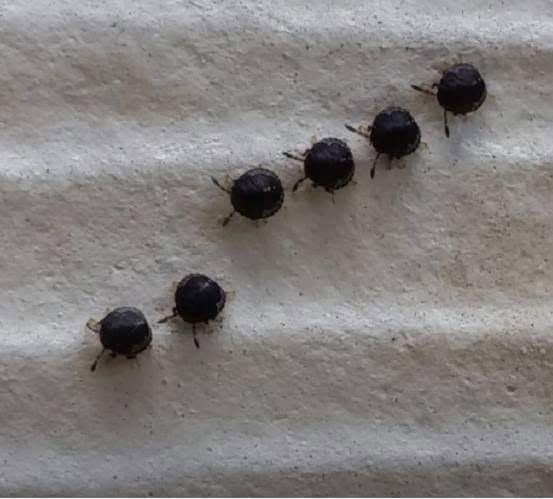
That vibrant blue isn’t just pretty—it’s a natural warning signal. Many jewel bugs produce defensive chemicals that taste intensely bitter and can cause:
Nausea or stomach upset if ingested
Skin irritation in sensitive individuals (from handling)
🚫 Never eat anything in the garden that hasn’t been positively identified as food.
2. They Release a Foul Odor When Disturbed
Like other stink bugs, they emit a pungent smell when threatened—a defense mechanism that deters predators (and curious humans!).
3. Mistaking Them Could Be Dangerous
While Homaemus proteus isn’t highly toxic, other blue-colored insects or fungi might be. Always assume unknown garden “berries” are not edible.
🐞 Are They Harmful to Your Garden?
Good news: No!
Jewel bugs are not plant pests—they don’t damage crops or flowers
They feed on decaying plant matter or fungi, not living tissue
They’re part of a healthy ecosystem, serving as food for birds, lizards, and beneficial insects
🌱 Leave them be! They’re harmless oddities—not invaders.
✅ What Should You Do If You See Them?
Observe—but don’t touch
Teach kids and pets to admire from a distance
Take a photo—they’re fascinating examples of natural mimicry!
Wash hands if you accidentally brush against them
💡 Fun fact: Their metallic sheen comes from structural coloration—light refracting off microscopic layers in their exoskeleton, not pigment!
🌍 Nature’s Clever Trick: Mimicry for Survival
This is a classic case of Batesian mimicry: a harmless species evolves to look like something dangerous or unpalatable.
By resembling juicy blueberries, these bugs avoid being eaten by birds who’ve learned that bright blue = bad taste.
It’s not deception—it’s evolution at work.
💬 Final Thought
Gardens are full of wonders—and warnings.
That “blueberry” might be a bug. That “mushroom” might be poisonous. That “flower” might be a carnivorous plant.
The rule is simple:
If it’s not growing where it’s supposed to—and you didn’t plant it—don’t eat it.
So next time you see mysterious blue orbs in your garden, smile at nature’s cleverness… and walk away with curiosity, not a snack.
“The best gardeners aren’t just growers—they’re respectful observers.”
Have you ever mistaken an insect for a fruit? Share your story below—we’re all learning to see nature more clearly!