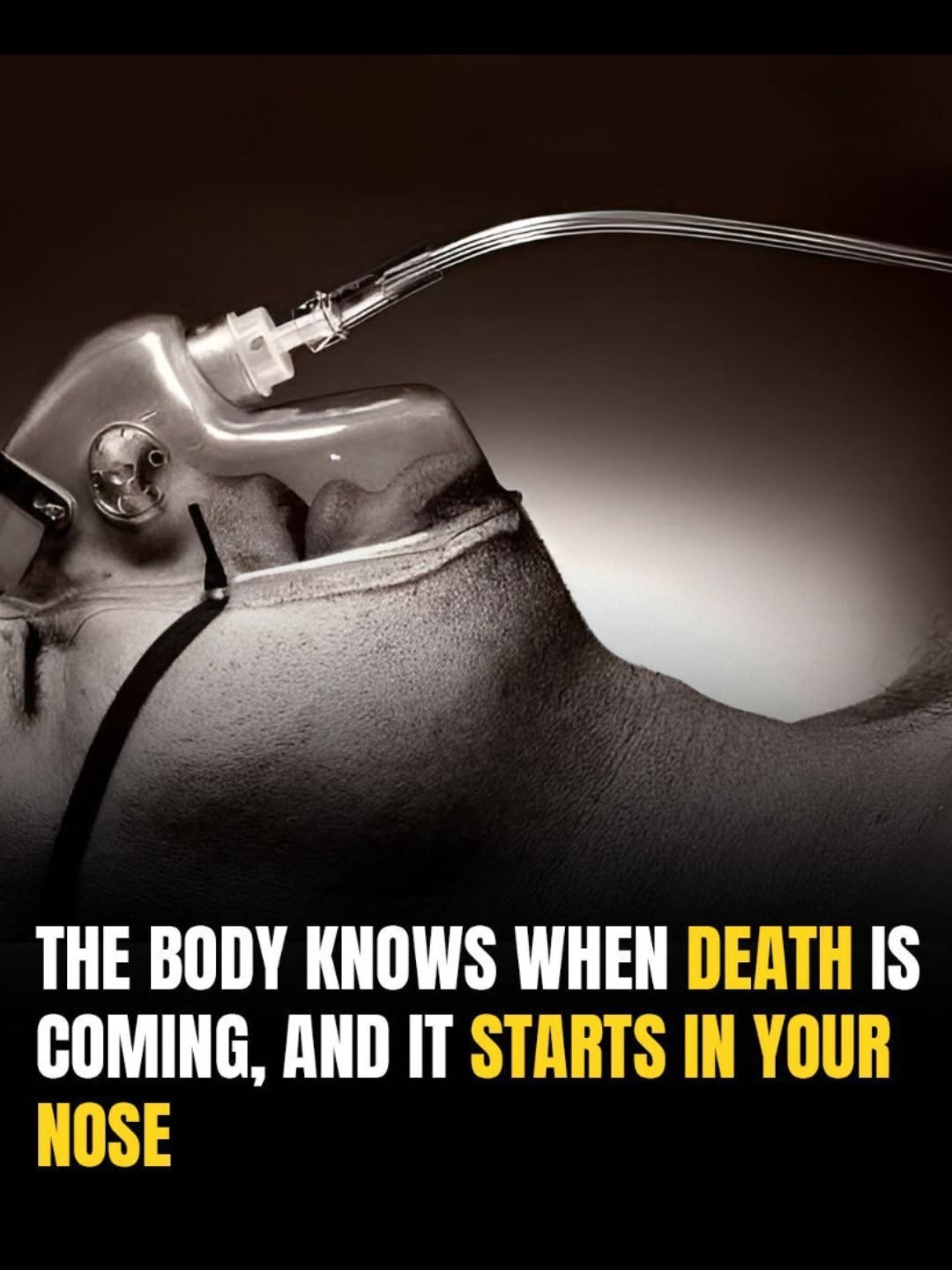
Your olfactory system—the network of nerves and receptors in your nose—is unlike any other sensory pathway.
It:
Has direct access to the brain’s limbic system, which governs emotion, memory, and survival instincts
Can detect volatile organic compounds (VOCs) released by the body during disease and decay
May act as an early radar for physiological change—even when no one else notices
In short:
Smell isn’t just about scent.
It’s about survival, bonding, and biological awareness.
🔍 1. Smelling Death: The Odor of Dying
Many people who work in hospice care report a distinct change in smell as someone approaches death.
Common descriptions include:
A sweet, floral scent (like honeysuckle or perfume)
A metallic tang, like blood or copper
A faint rotting undertone, though not unpleasant
This odor comes from biochemical changes in the body as organs shut down:
The liver fails → toxins build up (like acetone, ammonia)
Gut bacteria shift → release sulfur-containing gases
Metabolism slows → ketones accumulate
These volatile compounds are exhaled through the breath, seep through pores, and can even be detected on bedding.
While most people don’t consciously notice it, some do—especially those with heightened sensitivity.
🐶 Animals Know First — Because They Rely on Smell
Dogs, cats, and even insects have long been observed behaving strangely around the dying.
Hospice dogs like Oscar the Cat, who lived in a Rhode Island nursing home, gained fame for curling up beside patients hours before they died—with eerie accuracy.
Why?
👉 Their noses detect subtle chemical shifts invisible to humans.
Studies show animals can smell:
Ketones (from metabolic breakdown)
Inflammatory markers
Changes in pheromones and stress hormones
They aren’t “predicting” death.
They’re responding to real, measurable odors signaling systemic collapse.
👃 2. Losing Smell? It Might Predict Mortality
Now flip the script.
What if your own sense of smell could tell you about your future?
A growing body of research says: Yes.
📊 Key Findings:
A 2014 study in Annals of Internal Medicine followed over 3,000 adults aged 57–85.
Those who failed a simple smell test were twice as likely to die within five years—even after adjusting for age, health, and lifestyle.
Poor smell was linked to earlier death from neurodegenerative diseases (Alzheimer’s, Parkinson’s), heart disease, and frailty.
Why?
The olfactory nerve is one of the first areas affected by neurodegeneration.
Loss of smell reflects broader biological aging and nervous system decline.
In essence:
If your nose stops working… your body might already be preparing to let go.
💬 Why Do We Seldom Talk About This?
Smell is our most primal sense—yet also the most ignored.
We don’t say:
“I smelled grief.”
“I knew she was gone before I walked into the room.”
But many have felt it.
And science is beginning to validate these experiences—not as supernatural, but as deeply biological.
❤️ Final Thought: The Body Speaks — If We Learn to Listen
You don’t need words to know love.
You don’t need monitors to feel loss.
Sometimes, all it takes is:
A scent on the air
A silence in the sinuses
And the courage to say: “Something has changed.”
Because real wisdom isn’t always seen.
It’s sniffed. Felt. Known.
And when you sit beside someone at the end, and breathe in that quiet sweetness…
You’ll understand:
The body doesn’t hide death.
It announces it—softly, gently, through the oldest sense we have.