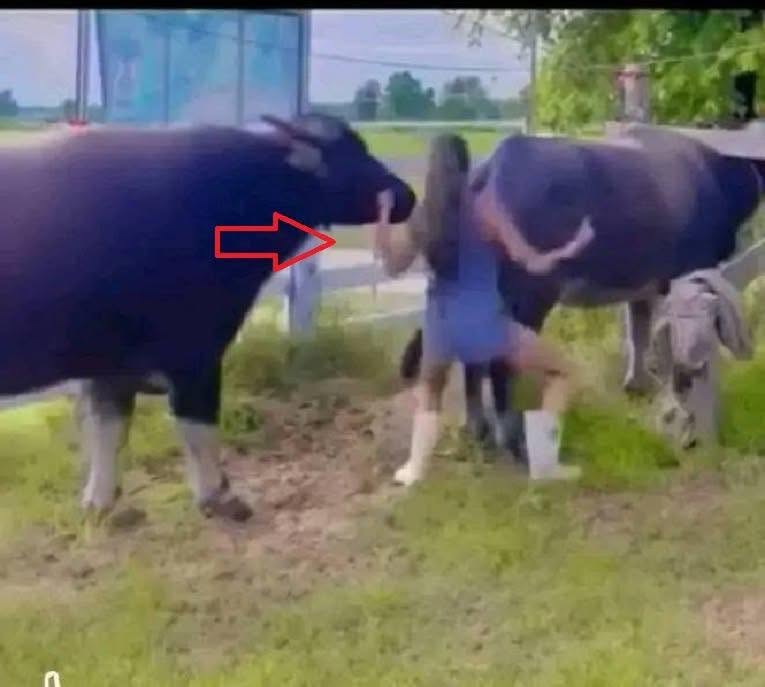
When emotions run high, people often act without fully considering the risks. That’s exactly what happened when a young woman found herself standing between two aggressive water buffaloes locked in a fierce confrontation.
What may have seemed like an attempt to calm the situation quickly turned into a frightening reminder of the immense power of large livestock animals—and a sobering lesson in why expert guidance matters when working with animals.
According to reports, the woman stepped directly between the two buffaloes as they fought. Hoping to stop the conflict, she reportedly grabbed the tail of one animal while attempting to hold back the other.
Unfortunately, the situation escalated almost instantly.
⚠️ The Incident: A Split-Second Decision with Serious Consequences
Water buffaloes are among the strongest domesticated animals in the world. An adult can weigh between 1,100 and 2,600 pounds (500–1,200 kg), stand over 5 feet tall at the shoulder, and generate tremendous force when moving or pushing.
When animals become stressed, frightened, or aggressive, their behavior can become highly unpredictable.
In this case, the buffaloes reacted violently during the struggle. Witnesses described a chaotic scene as the animals thrashed, pushed, and pivoted with surprising speed. The woman was unable to control their movements and was ultimately knocked to the ground.
The force generated by two large animals in conflict can be overwhelming—even for experienced handlers.
As a result of the incident, she reportedly suffered serious injuries and required emergency medical treatment.
💡 Key insight: This story isn’t about blame. It’s about awareness. Well-intentioned actions can lead to harm when we underestimate the power of animals or overestimate our ability to control unpredictable situations.
🐃 Understanding Water Buffalo Behavior
To prevent similar incidents, it helps to understand why large livestock animals behave the way they do—especially during conflict.
Why Water Buffaloes Fight:
|
Trigger
|
Explanation
|
|---|---|
|
Dominance disputes
|
Males often compete for herd leadership or mating rights
|
|
Resource competition
|
Food, water, or preferred resting spots can spark conflict
|
|
Territorial behavior
|
Animals may defend space they consider theirs
|
|
Stress or fear
|
Loud noises, unfamiliar people, or sudden changes can trigger defensive aggression
|
|
Protective instincts
|
Mothers may become aggressive if they perceive a threat to their young
|
Signs of Escalating Aggression:
✅ Ears pinned back or held stiffly
✅ Head lowered, horns pointed forward
✅ Snorting, pawing the ground, or vocalizing loudly
✅ Stiff-legged stance or rapid pivoting
✅ Direct, unblinking eye contact
✅ Head lowered, horns pointed forward
✅ Snorting, pawing the ground, or vocalizing loudly
✅ Stiff-legged stance or rapid pivoting
✅ Direct, unblinking eye contact
🚨 Warning: Once an animal displays these signs, it is often seconds away from charging or striking. Do not approach.
🚫 Why Experts Warn Against Intervening in Animal Conflicts
Animal behavior specialists, veterinarians, and livestock handlers consistently advise people to avoid placing themselves between fighting animals.
The Risks of Direct Intervention:
|
Risk
|
Why It Happens
|
|---|---|
|
Trampling
|
Large animals can knock a person down without intending to; once on the ground, escape is difficult
|
|
Goring or striking
|
Horns, hooves, and heads are powerful weapons; a single swing can cause severe injury
|
|
Unpredictable movement
|
Animals in conflict focus on each other, not on humans nearby; they may pivot, charge, or retreat suddenly
|
|
Secondary injuries
|
Being thrown against fences, walls, or equipment can cause fractures, head trauma, or internal injuries
|
|
Delayed reaction
|
Even if an animal doesn’t target you directly, the chaos of a fight can sweep you into danger
|
🧠 Important: Animals in aggressive states operate on instinct, not logic. They do not “recognize” humans as helpers in the moment. Your presence may even escalate their stress.
🚜 Common Mistakes People Make Around Livestock
Many people underestimate the risks associated with farm animals because they see them regularly in rural communities, at petting zoos, or on family farms. Familiarity can breed complacency.
Frequent Errors That Lead to Injury:
|
Mistake
|
Why It’s Dangerous
|
|---|---|
|
Standing too close during aggression
|
Reduces reaction time; puts you in the “strike zone”
|
|
Attempting to separate fighting animals alone
|
One person cannot safely control two large, agitated animals
|
|
Entering confined spaces with stressed livestock
|
Limited escape routes increase risk of being trapped
|
|
Assuming familiar animals will remain calm
|
Even gentle animals can react unpredictably under stress
|
|
Trying to intervene without proper equipment or training
|
Ropes, panels, or noise-makers require skill to use safely
|
|
Ignoring warning signs
|
Missing early cues removes your chance to retreat safely
|
🌾 Reality check: Livestock-related injuries are among the most common causes of farm accidents worldwide. Most occur during routine handling—not extraordinary events.
✅ What to Do Instead: Expert-Recommended Safety Practices
If you encounter fighting livestock, your priority should be personal safety—not immediate intervention.
Step-by-Step Response Guide:
|
Step
|
Action
|
Why It Matters
|
|---|---|---|
|
1. Stay calm and assess
|
Pause. Observe the animals’ behavior and your surroundings.
|
Panic leads to poor decisions; assessment informs safe action
|
|
2. Create distance immediately
|
Move away from the conflict zone; seek cover behind a sturdy barrier if possible.
|
Distance is your best protection from unpredictable movement
|
|
3. Alert experienced help
|
Call a trained handler, veterinarian, or local animal control.
|
Professionals have tools, training, and experience to de-escalate safely
|
|
**4. Use indirect deterrents **(if trained)
|
Loud noises, water sprays, or visual barriers from a safe distance may help separate animals.
|
Only attempt if you have training; improper use can worsen aggression
|
|
5. Secure the area
|
Keep other people, children, and pets away until the situation is resolved.
|
Prevents additional injuries and reduces stress on the animals
|
|
6. Document and report
|
Note details for animal welfare records or veterinary follow-up.
|
Helps prevent future incidents and supports animal care
|
🛡️ Pro tip: If you work with livestock regularly, invest in safety training. Courses in animal behavior, low-stress handling, and emergency response can save lives—yours and theirs.
🩺 If an Injury Occurs: Immediate First Aid Steps
If someone is injured during a livestock incident, quick, calm action can make a critical difference.
First Aid Priorities:
|
Situation
|
Action
|
|---|---|
|
Person is conscious and mobile
|
Help them move to a safe area; call emergency services; monitor for shock
|
|
Person is unconscious or unable to move
|
Do not move them unless in immediate danger; call emergency services; keep them warm and still
|
|
Bleeding wounds
|
Apply firm, direct pressure with a clean cloth; elevate if possible; do not remove embedded objects
|
|
Suspected fractures or head injury
|
Immobilize the area; avoid moving the person; wait for professional medical help
|
|
**Signs of shock **(pale skin, rapid pulse, confusion)
|
Lay the person down, elevate legs slightly if no spinal injury is suspected, keep warm, and monitor breathing
|
🚑 Critical reminder: Always call emergency services for livestock-related injuries. Even seemingly minor trauma can hide serious internal damage.
❓ Frequently Asked Questions
Q: Are water buffaloes more dangerous than cows or horses?
A: All large livestock can be dangerous if stressed or mishandled. Water buffaloes are particularly strong and can be more reactive due to their wild ancestry. Respect and caution are essential with any large animal.
A: All large livestock can be dangerous if stressed or mishandled. Water buffaloes are particularly strong and can be more reactive due to their wild ancestry. Respect and caution are essential with any large animal.
Q: Can you ever safely separate fighting animals?
A: Only with proper training, equipment, and backup. Professionals may use barriers, noise, or distraction techniques—but never attempt this alone or without experience.
A: Only with proper training, equipment, and backup. Professionals may use barriers, noise, or distraction techniques—but never attempt this alone or without experience.
Q: What should I teach children about livestock safety?
A: Teach them to: observe from a distance, never run near animals, avoid sudden movements or loud noises, and always ask an adult before approaching any farm animal.
A: Teach them to: observe from a distance, never run near animals, avoid sudden movements or loud noises, and always ask an adult before approaching any farm animal.
Q: How can farmers reduce aggression in their herds?
A: Provide adequate space, consistent routines, proper nutrition, and low-stress handling. Early socialization and avoiding overcrowding also help minimize conflict.
A: Provide adequate space, consistent routines, proper nutrition, and low-stress handling. Early socialization and avoiding overcrowding also help minimize conflict.
Q: Is it ever okay to touch a water buffalo?
A: Only if the animal is accustomed to human contact, under controlled conditions, and with the guidance of an experienced handler. Never approach an unfamiliar or agitated animal.
A: Only if the animal is accustomed to human contact, under controlled conditions, and with the guidance of an experienced handler. Never approach an unfamiliar or agitated animal.
Q: What if I see someone trying to intervene in a dangerous animal situation?
A: Calmly urge them to step back and seek help. If they refuse and are in immediate danger, call emergency services and alert others nearby.
A: Calmly urge them to step back and seek help. If they refuse and are in immediate danger, call emergency services and alert others nearby.
Q: Are there warning signs before an animal becomes aggressive?
A: Yes. Watch for pinned ears, lowered head, snorting, pawing, stiff posture, or direct staring. When you see these, create distance immediately.
A: Yes. Watch for pinned ears, lowered head, snorting, pawing, stiff posture, or direct staring. When you see these, create distance immediately.
Q: Can stress in animals be prevented?
A: While not all stress can be eliminated, consistent routines, adequate resources, gentle handling, and avoiding overcrowding significantly reduce triggers for aggression.
A: While not all stress can be eliminated, consistent routines, adequate resources, gentle handling, and avoiding overcrowding significantly reduce triggers for aggression.
💙 A Compassionate Closing Thought
If you’re reading this because you or someone you know has been hurt around animals—or because you simply want to stay safe in rural or farm settings—please know:
🐃 Intentions matter, but knowledge saves. Wanting to help is noble. Knowing how to help safely is essential.
🐃 Animals aren’t “bad” for reacting. They follow instinct, not malice. Understanding their behavior protects everyone.
🐃 Asking for help is strength. Calling a trained handler isn’t weakness—it’s wisdom.
🐃 Healing takes time. If you’ve experienced trauma around animals, be gentle with yourself. Support is available.
🐃 Animals aren’t “bad” for reacting. They follow instinct, not malice. Understanding their behavior protects everyone.
🐃 Asking for help is strength. Calling a trained handler isn’t weakness—it’s wisdom.
🐃 Healing takes time. If you’ve experienced trauma around animals, be gentle with yourself. Support is available.
This story isn’t about fear. It’s about respect.
Respect for the power of living beings.
Respect for the limits of human control.
Respect for the wisdom of waiting, observing, and seeking help.
Respect for the limits of human control.
Respect for the wisdom of waiting, observing, and seeking help.
However your path intersects with animals—on a farm, in the wild, or during a rural visit—may you move with awareness, caution, and compassion.
For their safety. And for yours.
🧭 The Bottom Line
Trying to stop fighting livestock is extremely dangerous and strongly discouraged by experts.
Remember: 🐃 Water buffaloes and other large animals are powerful, fast, and unpredictable when stressed
🚫 Never place yourself between fighting animals—distance is your best protection
✅ Alert trained professionals; use indirect deterrents only if properly trained
🩺 If injury occurs, prioritize safety, call emergency services, and follow first aid protocols
💙 Prevention through education, training, and respect saves lives
🚫 Never place yourself between fighting animals—distance is your best protection
✅ Alert trained professionals; use indirect deterrents only if properly trained
🩺 If injury occurs, prioritize safety, call emergency services, and follow first aid protocols
💙 Prevention through education, training, and respect saves lives
You don’t have to be an expert to stay safe. You just need to know when to step back—and who to call.
Because sometimes, the bravest thing you can do is wait for help.
Have you worked with livestock or witnessed animal conflicts? What safety practices have you found most effective? Share your experiences and tips respectfully in the comments below. 🌾