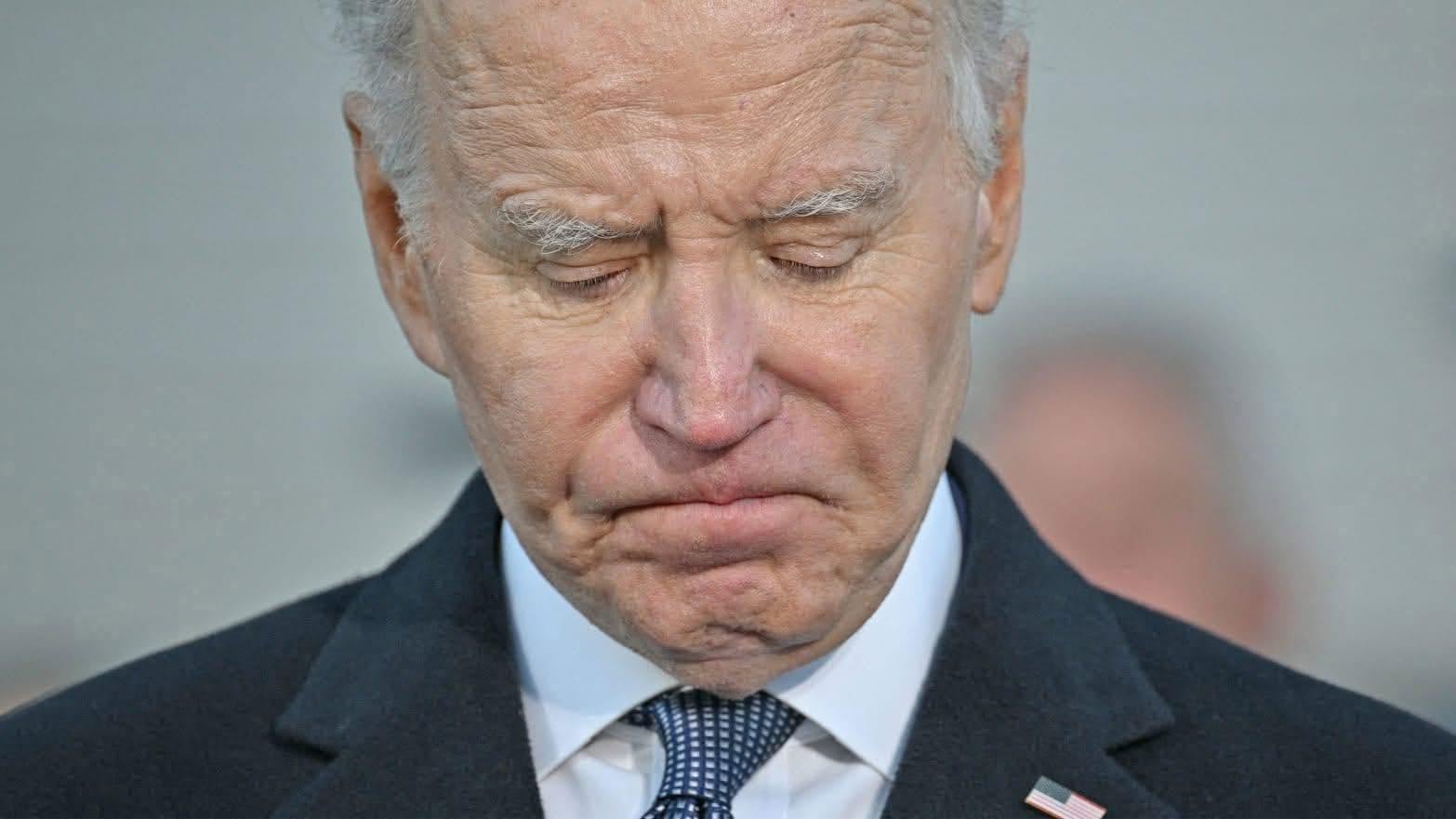
The words would send shockwaves across the nation: the President has been hospitalized, and questions about the continuity of government are suddenly at the forefront of public attention.
In moments of national uncertainty, Americans often wonder what would happen if a sitting president became temporarily unable to carry out the duties of the office. While such situations are rare, the United States has established constitutional procedures designed to ensure stability, continuity, and the orderly transfer of authority when necessary.
This isn’t just a theoretical question. History has shown us that presidents face health challenges—from surgeries to sudden illnesses to long-term conditions. And while the American system is built to endure, understanding how it works can provide clarity when headlines grow urgent.
Let’s explore the constitutional framework, historical precedents, and practical realities of presidential health crises—and what they mean for the nation.
⚖️ The 25th Amendment: The Constitutional Safety Net
Ratified in 1967 in the wake of President John F. Kennedy’s assassination, the 25th Amendment provides the legal framework for addressing presidential disability, vacancy, or incapacity.
It has four sections, each addressing a different scenario:
Section 1: Vacancy in the Presidency
“In case of the removal of the President from office or of his death or resignation, the Vice President shall become President.”
✅ What it means: If the presidency becomes vacant, the Vice President doesn’t just “act” as President—they become President, with full powers and title.
Section 2: Vacancy in the Vice Presidency
“Whenever there is a vacancy in the office of the Vice President, the President shall nominate a Vice President who shall take office upon confirmation by a majority vote of both Houses of Congress.”
✅ What it means: If the Vice Presidency becomes vacant (due to death, resignation, or succession to the presidency), the President nominates a replacement, subject to Congressional approval.
Section 3: Voluntary Temporary Transfer of Power:
Section 3: Voluntary Temporary Transfer of Power
“Whenever the President transmits to the President pro tempore of the Senate and the Speaker of the House of Representatives his written declaration that he is unable to discharge the powers and duties of his office, and until he transmits to them a written declaration to the contrary, such powers and duties shall be discharged by the Vice President as Acting President.”
✅ What it means: The President can voluntarily and temporarily transfer power to the Vice President—typically for planned medical procedures requiring anesthesia.
📋 Real-world example:
- President George W. Bush invoked Section 3 twice (2002, 2007) during colonoscopies, transferring power to Vice President Dick Cheney for approximately two hours each time.
- President Joe Biden has not formally invoked Section 3 during routine medical procedures, though the topic has been publicly discussed.
Section 4: Involuntary Transfer of Power (The Most Complex Scenario)
“Whenever the Vice President and a majority of either the principal officers of the executive departments or of such other body as Congress may by law provide, transmit to the President pro tempore of the Senate and the Speaker of the House of Representatives their written declaration that the President is unable to discharge the powers and duties of his office, the Vice President shall immediately assume the powers and duties of the office as Acting President.”
✅ What it means: If the President is unable or unwilling to declare their own incapacity, the Vice President and a majority of the Cabinet (or another designated body) can declare the President unable to serve. The Vice President then becomes Acting President.
🔄 The process doesn’t end there:
- The President can submit a written declaration that they are able to serve, reclaiming power immediately.
- If the Vice President and Cabinet disagree, Congress must decide.
- Within 21 days, both the House and Senate must vote by a two-thirds majority to keep the Vice President as Acting President.
- If Congress does not reach that threshold, the President resumes power.
💡 Key insight: Section 4 has never been invoked. It is intentionally difficult to activate—designed to prevent political abuse while providing a last-resort mechanism for genuine crises.
🏥 How Medical Decisions Are Made During a Presidential Health Crisis
When a president faces a serious health issue, multiple layers of expertise come into play.
The Medical Team:
|
Role
|
Responsibility
|
|---|---|
|
White House Physician
|
Leads medical care; advises on fitness for duty; coordinates with specialists
|
|
Specialist consultants
|
Provide expert care for specific conditions (cardiology, neurology, surgery, etc.)
|
|
Walter Reed National Military Medical Center
|
Primary facility for presidential care; equipped for emergencies and confidentiality
|
The Decision-Making Chain:
- Medical assessment: Physicians evaluate the president’s condition and ability to perform duties.
- Confidential consultation: The White House Physician briefs the President, Chief of Staff, and potentially the Vice President.
- Legal review: White House Counsel and Department of Justice attorneys review constitutional options.
- National security coordination: The National Security Council ensures continuity of command.
- Public communication: The White House Press Secretary and medical team prepare updates for the public.
🔒 Confidentiality note: Presidential health information is protected by privacy laws and security protocols. Not all details are publicly disclosed—even during crises.
📜 Historical Precedents: When Presidents Faced Health Challenges
While no president has ever been removed from power via the 25th Amendment, history offers several instructive examples.
President James A. Garfield (1881)
- Situation: Shot by an assassin; survived for 80 days but was incapacitated by infection and pain.
- Outcome: No constitutional mechanism existed for temporary transfer of power. Vice President Chester Arthur assumed duties informally but did not become Acting President.
- Legacy: Highlighted the need for clearer succession rules.
President Woodrow Wilson (1919)
- Situation: Suffered a severe stroke; was largely incapacitated for months.
- Outcome: First Lady Edith Wilson and close advisors effectively managed many presidential duties, though no formal transfer occurred.
- Legacy: Demonstrated the risks of unclear incapacity protocols.
President Dwight D. Eisenhower (1950s)
- Situation: Suffered a heart attack (1955) and intestinal surgery (1956).
- Outcome: Created informal agreements with Vice President Richard Nixon to handle duties during recovery—precursors to the 25th Amendment.
- Legacy: Directly influenced the drafting of the 25th Amendment.
President Ronald Reagan (1981)
- Situation: Shot in an assassination attempt; underwent emergency surgery.
- Outcome: Did not formally invoke the 25th Amendment, though Vice President George H.W. Bush was prepared to assume duties if needed.
- Legacy: Renewed discussion about when Section 3 should be used.
President George W. Bush (2002, 2007)
- Situation: Routine colonoscopies requiring anesthesia.
- Outcome: Formally invoked Section 3 twice, transferring power to Vice President Dick Cheney for approximately two hours each time.
- Legacy: Established a modern precedent for voluntary, temporary transfers during medical procedures.
📚 Historical lesson: Before the 25th Amendment, presidential incapacity was handled through informal arrangements, personal discretion, or sheer luck. The Amendment brought clarity—but its most complex provisions remain untested.
🗳️ The Presidential Line of Succession: Who Takes Over If Needed?
If both the President and Vice President are unable to serve, the Presidential Succession Act of 1947 (as amended) establishes the order of succession.
Current Line of Succession:
|
Order
|
Office
|
Current Officeholder*
|
|---|---|---|
|
1
|
Vice President
|
[Sitting VP]
|
|
2
|
Speaker of the House
|
[Sitting Speaker]
|
|
3
|
President pro tempore of the Senate
|
[Sitting Senate President pro tempore]
|
|
4
|
Secretary of State
|
[Sitting Secretary]
|
|
5
|
Secretary of the Treasury
|
[Sitting Secretary]
|
|
6
|
Secretary of Defense
|
[Sitting Secretary]
|
|
7
|
Attorney General
|
[Sitting Attorney General]
|
|
8–15
|
Remaining Cabinet secretaries
|
In order of department creation
|
* Officeholders change with elections and appointments; this list reflects structure, not specific names.
Important Requirements for Successors:
✅ Must meet constitutional eligibility for the presidency (natural-born citizen, at least 35 years old, 14 years U.S. resident)
✅ Must be confirmed by the Senate (for Cabinet members)
✅ Must be able to take the presidential oath of office
✅ Must be confirmed by the Senate (for Cabinet members)
✅ Must be able to take the presidential oath of office
⚠️ Note: The Speaker of the House and President pro tempore of the Senate are elected officials, not presidential appointees. This ensures that at least some successors have direct democratic legitimacy.
🗣️ Communication and Transparency: What the Public Can Expect
During a presidential health crisis, balancing transparency with security is delicate.
Typical Communication Protocol:
|
Stage
|
What Happens
|
|---|---|
|
Initial incident
|
White House issues brief statement; medical team evaluates
|
|
Ongoing care
|
Regular updates from White House Physician; limited details to protect privacy and security
|
|
**Transfer of power **(if applicable)
|
Formal written declarations transmitted to Congressional leadership; public announcement follows
|
|
Recovery and return
|
President submits written declaration of readiness; power resumes; public update provided
|
What Information Is Typically Shared:
✅ General nature of the condition (e.g., “undergoing scheduled surgery”)
✅ Expected timeline for recovery
✅ Confirmation of who is exercising presidential authority
✅ Reassurance about continuity of government operations
✅ Expected timeline for recovery
✅ Confirmation of who is exercising presidential authority
✅ Reassurance about continuity of government operations
What Is Typically Withheld:
❌ Specific medical diagnoses or prognoses (unless the President consents)
❌ Details that could compromise security (location, treatment facility, staff movements)
❌ Speculative or unconfirmed information
❌ Details that could compromise security (location, treatment facility, staff movements)
❌ Speculative or unconfirmed information
📰 Media note: Responsible news organizations verify information through official channels before reporting. Rumors and unconfirmed leaks can cause unnecessary public anxiety.
🔍 Scenario Breakdown: What Happens in Different Situations?
Scenario 1: Planned Medical Procedure (e.g., Surgery)
✅ President voluntarily invokes Section 3 of the 25th Amendment
✅ Power transfers to Vice President as Acting President for a defined period
✅ President resumes power via written declaration upon recovery
✅ Public is informed before, during, and after the transfer
✅ Power transfers to Vice President as Acting President for a defined period
✅ President resumes power via written declaration upon recovery
✅ Public is informed before, during, and after the transfer
Scenario 2: Sudden Illness or Injury (President Conscious and Able to Communicate)
✅ President may choose to invoke Section 3 voluntarily
✅ If not, the White House Physician and senior staff assess capacity
✅ If the President is deemed unable to serve but disagrees, Section 4 procedures may be considered
✅ Communication is carefully managed to avoid panic or speculation
✅ If not, the White House Physician and senior staff assess capacity
✅ If the President is deemed unable to serve but disagrees, Section 4 procedures may be considered
✅ Communication is carefully managed to avoid panic or speculation
Scenario 3: Severe Incapacity (President Unable to Communicate)
✅ Vice President and Cabinet may invoke Section 4 if they believe the President cannot serve
✅ Vice President becomes Acting President immediately
✅ President can reclaim power by submitting a written declaration of ability
✅ If disputed, Congress decides within 21 days by two-thirds vote
✅ Vice President becomes Acting President immediately
✅ President can reclaim power by submitting a written declaration of ability
✅ If disputed, Congress decides within 21 days by two-thirds vote
Scenario 4: Permanent Disability or Death
✅ Section 1 applies: Vice President becomes President (not just Acting President)
✅ New Vice President is nominated and confirmed per Section 2
✅ Inauguration or swearing-in occurs promptly to ensure continuity
✅ New Vice President is nominated and confirmed per Section 2
✅ Inauguration or swearing-in occurs promptly to ensure continuity
🧭 Guiding principle: The system prioritizes stability. Even in uncertainty, government functions continue, and authority is clearly defined at every step.
❓ Frequently Asked Questions
Q: Has the 25th Amendment ever been used to remove a president against their will?
A: No. Section 4, which allows for involuntary transfer, has never been invoked. All uses of the Amendment have been voluntary (Section 3) or related to succession (Sections 1 and 2).
A: No. Section 4, which allows for involuntary transfer, has never been invoked. All uses of the Amendment have been voluntary (Section 3) or related to succession (Sections 1 and 2).
Q: Can a president be forced to undergo a medical evaluation?
A: There is no explicit constitutional mechanism for this. However, political and public pressure, along with advice from medical and legal advisors, can influence a president’s decisions.
A: There is no explicit constitutional mechanism for this. However, political and public pressure, along with advice from medical and legal advisors, can influence a president’s decisions.
Q: What if the Vice President is also unable to serve?
A: The line of succession continues down the list (Speaker of the House, then President pro tempore of the Senate, then Cabinet secretaries). Each successor must meet constitutional eligibility requirements.
A: The line of succession continues down the list (Speaker of the House, then President pro tempore of the Senate, then Cabinet secretaries). Each successor must meet constitutional eligibility requirements.
Q: Does the Acting President have the same powers as the President?
A: Yes. An Acting President exercises all powers and duties of the office. The only difference is the title and the temporary nature of the role.
A: Yes. An Acting President exercises all powers and duties of the office. The only difference is the title and the temporary nature of the role.
Q: Can Congress override a president’s declaration that they are fit to serve?
A: Yes—but only under Section 4, and only by a two-thirds vote in both the House and Senate. This high threshold is intentional, to prevent political abuse.
A: Yes—but only under Section 4, and only by a two-thirds vote in both the House and Senate. This high threshold is intentional, to prevent political abuse.
Q: What role does the military play during a presidential health crisis?
A: The military chain of command remains intact. The Secretary of Defense and Joint Chiefs continue operations under the authority of whoever is serving as President or Acting President.
A: The military chain of command remains intact. The Secretary of Defense and Joint Chiefs continue operations under the authority of whoever is serving as President or Acting President.
Q: How quickly can power be transferred in an emergency?
A: Very quickly. Written declarations can be transmitted electronically. In a true crisis, the Vice President could assume Acting President status within minutes.
A: Very quickly. Written declarations can be transmitted electronically. In a true crisis, the Vice President could assume Acting President status within minutes.
Q: Are there plans for continuity of government beyond the presidency?
A: Yes. The U.S. has extensive Continuity of Government (COG) protocols to ensure that essential functions continue during catastrophic events, including attacks, natural disasters, or widespread incapacitation of leadership.
A: Yes. The U.S. has extensive Continuity of Government (COG) protocols to ensure that essential functions continue during catastrophic events, including attacks, natural disasters, or widespread incapacitation of leadership.
💙 A Compassionate Closing Thought
If you’re reading this because recent news has raised concerns—or because you simply want to understand how the system works in uncertain times—please know:
🇺🇸 The system is designed for resilience. The Founders knew leaders are human. They built safeguards not because they expected failure, but because they valued stability.
🇺🇸 Uncertainty is hard—but you’re not alone. In moments of national concern, institutions, experts, and fellow citizens work together to maintain order and hope.
🇺🇸 Asking questions is patriotic. Understanding how your government works isn’t cynicism—it’s engagement. Curiosity strengthens democracy.
🇺🇸 Leadership is more than one person. Even when the presidency faces challenges, the broader system—Congress, courts, civil service, military, and citizens—keeps functioning.
🇺🇸 Uncertainty is hard—but you’re not alone. In moments of national concern, institutions, experts, and fellow citizens work together to maintain order and hope.
🇺🇸 Asking questions is patriotic. Understanding how your government works isn’t cynicism—it’s engagement. Curiosity strengthens democracy.
🇺🇸 Leadership is more than one person. Even when the presidency faces challenges, the broader system—Congress, courts, civil service, military, and citizens—keeps functioning.
Presidential health is a private matter with public consequences. The 25th Amendment doesn’t eliminate uncertainty—but it provides a clear path through it.
And in a nation built on the rule of law, that clarity is itself a source of strength.
🧭 The Bottom Line
If a U.S. President becomes seriously ill, constitutional procedures ensure continuity of government.
Remember: ⚖️ The 25th Amendment provides clear mechanisms for temporary or permanent transfer of power
🏥 Medical decisions involve expert teams, legal review, and national security coordination
🗳️ The line of succession extends beyond the Vice President to Congressional leaders and Cabinet members
🗣️ Communication balances transparency, privacy, and public reassurance
🇺🇸 The system is designed to endure—even when individuals cannot
🏥 Medical decisions involve expert teams, legal review, and national security coordination
🗳️ The line of succession extends beyond the Vice President to Congressional leaders and Cabinet members
🗣️ Communication balances transparency, privacy, and public reassurance
🇺🇸 The system is designed to endure—even when individuals cannot
The American experiment has survived wars, economic crises, and profound change. Its resilience lies not in perfect leaders, but in durable institutions.
However the future unfolds, the framework exists to ensure that the work of governance continues—steadily, lawfully, and with the consent of the governed.
Do you have questions about presidential succession, the 25th Amendment, or how government continuity works? Share your thoughts respectfully in the comments below.