How to Rig Them Like a Pro
✅ Soft Plastics (Worms, Lizards, Creatures):
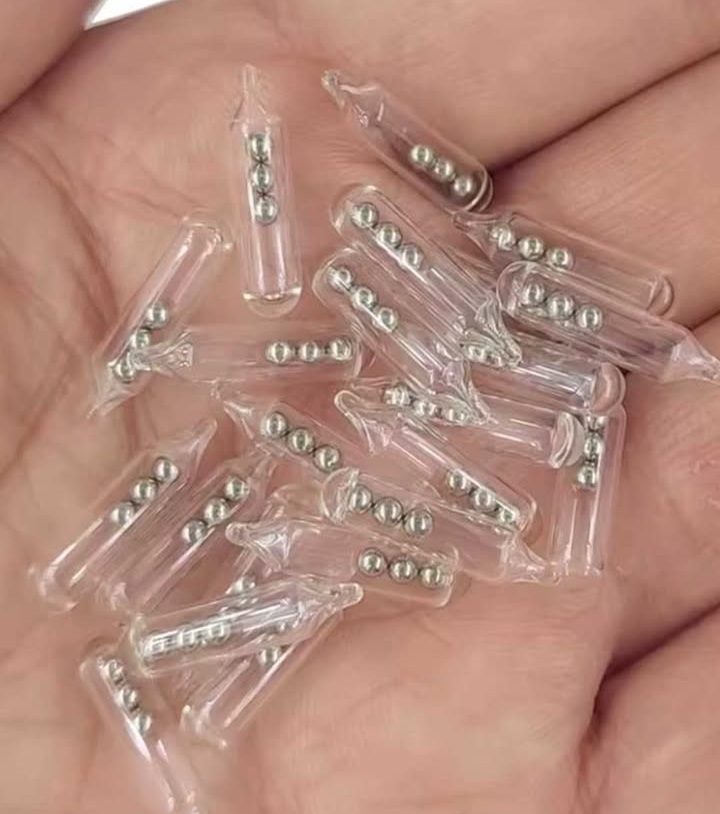
Poke a narrow channel near the tail with a bait needle or thin nail. Insert rattle bearing-end first. Why the tail? More wiggle = more vibration. Too deep? It won’t rattle. Too shallow? It falls out.
Poke a narrow channel near the tail with a bait needle or thin nail. Insert rattle bearing-end first. Why the tail? More wiggle = more vibration. Too deep? It won’t rattle. Too shallow? It falls out.
✅ Tubes & Craws (Easiest Win):
Slide the rattle up through the hollow body from the bottom. When it bumps rocks or wood? Click-click-click. Pure magic.
Slide the rattle up through the hollow body from the bottom. When it bumps rocks or wood? Click-click-click. Pure magic.
✅ Hard Lures (Crankbaits, Jerkbaits):
If the lure has a hollow chamber, drop one in before sealing. No chamber? Avoid gluing to the outside—it looks messy and alters action. Better to modify an old bait you don’t mind sacrificing.
If the lure has a hollow chamber, drop one in before sealing. No chamber? Avoid gluing to the outside—it looks messy and alters action. Better to modify an old bait you don’t mind sacrificing.
⚠️ Safety note: I’ve stabbed my thumb more times than I’d like to admit. Work slowly. Use tools. Your fingers will thank you.
Wisdom From the Water
🔹 Match the rattle to the conditions:
→ Murky water, low light, heavy cover? Use rattles.
→ Crystal-clear, calm water? Skip them—too much noise can spook fish.
→ Try two small rattles instead of one large one for higher-frequency clicks.
→ Murky water, low light, heavy cover? Use rattles.
→ Crystal-clear, calm water? Skip them—too much noise can spook fish.
→ Try two small rattles instead of one large one for higher-frequency clicks.
🔹 Placement changes everything:
Move the rattle from tail to mid-body. Test how the sound shifts. Sometimes a subtle tweak unlocks bites.
Move the rattle from tail to mid-body. Test how the sound shifts. Sometimes a subtle tweak unlocks bites.
🔹 Scent still matters:
Rattles attract attention. Scent seals the deal. Garlic, crawfish, anise—pair vibration with aroma. Sound + scent + motion = irresistible.
Rattles attract attention. Scent seals the deal. Garlic, crawfish, anise—pair vibration with aroma. Sound + scent + motion = irresistible.
🔹 Proof is in the catch:
I’ve fished side-by-side with a friend using identical rigs—same color, same retrieve. The only difference? My lure had a rattle. I caught fish. He waited. Not luck. Physics.
I’ve fished side-by-side with a friend using identical rigs—same color, same retrieve. The only difference? My lure had a rattle. I caught fish. He waited. Not luck. Physics.