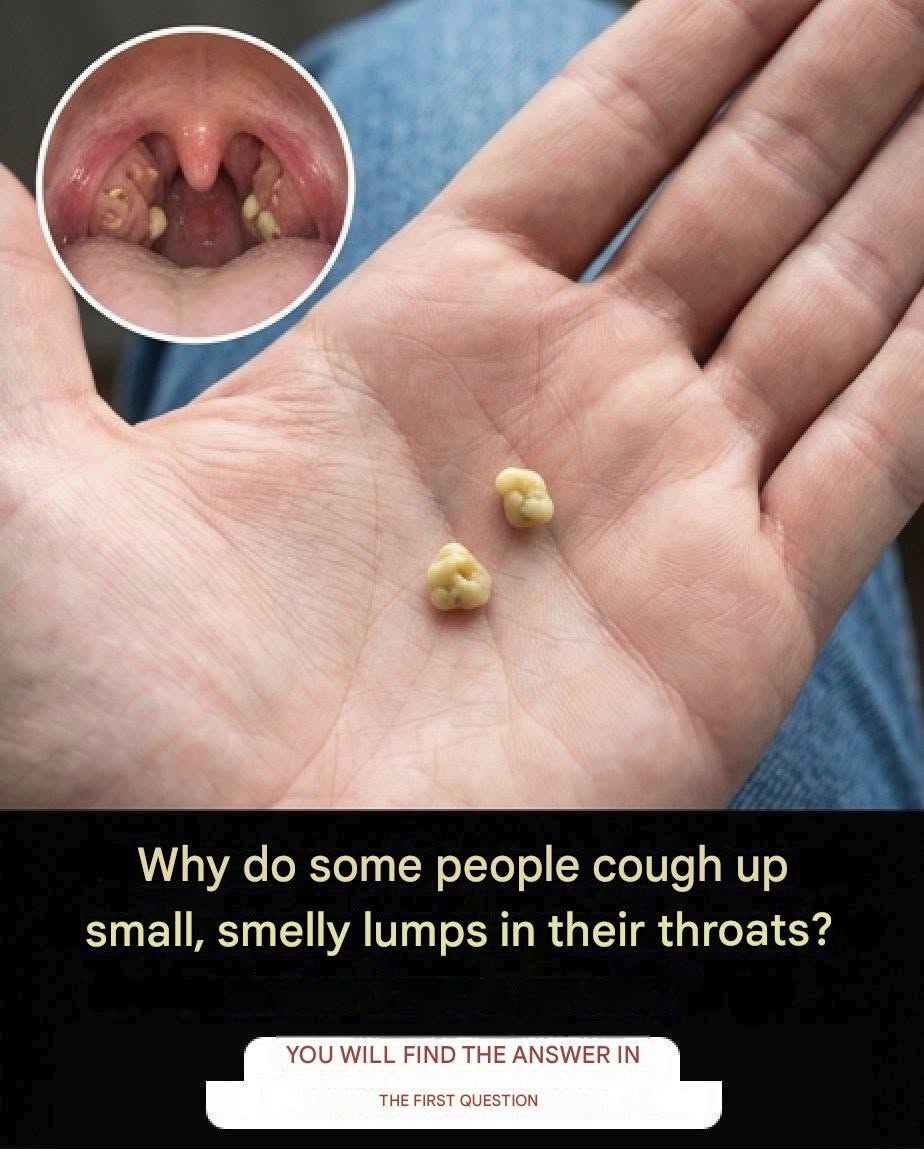
A whitish lump, an unpleasant odor… These could be tonsil stones, responsible for persistent bad breath that can be easily prevented.
A strange feeling in the throat, a small white lump… and above all, an unpleasant odor that’s hard to ignore. If this has ever happened to you, you’re not alone. Behind this relatively unknown phenomenon lies a reality that’s more common than you might think. But what exactly is it? And most importantly, how can you prevent it from recurring?
These little balls have a specific name.
These small deposits are called tonsil stones.
They form in small, natural depressions in the tonsils, called crypts. These folds can contain:
food debris
dead cells
microorganisms
Over time, all of this thickens and hardens, forming small balls that are sometimes visible.
Why do they appear?
Contrary to popular belief, this phenomenon is not necessarily related to poor hygiene.
Several factors can contribute to their appearance:
Special anatomy (deeper crypts)
Accumulation of debris in the throat
Repeated ENT episodes
Drier mouth
Some people are simply more susceptible to this condition than others.
A definite sign
The most common symptom is… persistent bad breath.
Even with regular toothbrushing, this odor can persist because it comes directly from the throat.
Other symptoms may also appear:
discomfort,
foreign body sensation,
mild irritation.
However, in most cases, the condition is mild.
How can you gently get rid of them?
The good news: they often disappear naturally.
To help your body eliminate them:
Gargle with warm salt water.
Remember to stay hydrated.
Use a mild mouthwash.
Maintain good oral hygiene (teeth and tongue).
Some people also use a dental flosser to gently clean their teeth.
Mistakes to Avoid
When faced with discomfort, the temptation to remove them yourself can be great.
However, be careful: manipulating the area with hard objects can irritate the tissues and cause additional discomfort.
It’s best to use gentle methods or, if necessary, seek professional advice.
When should you see a doctor?
In most cases, there’s no cause for concern.
However, it’s best to seek medical advice if:
These episodes are becoming more frequent.
The discomfort persists.
Or worsens.
A specialist will be able to suggest an appropriate and safe solution.
Prevention is better than cure. Developing a few simple habits can make a huge difference:
Brush your teeth after meals
Clean your tongue regularly
Drink enough water
Avoid stubborn food particles
These actions help reduce the accumulation responsible for these deposits.
A small, subtle detail… but one worth paying close attention to to ensure your daily comfort.