The universe had other plans.
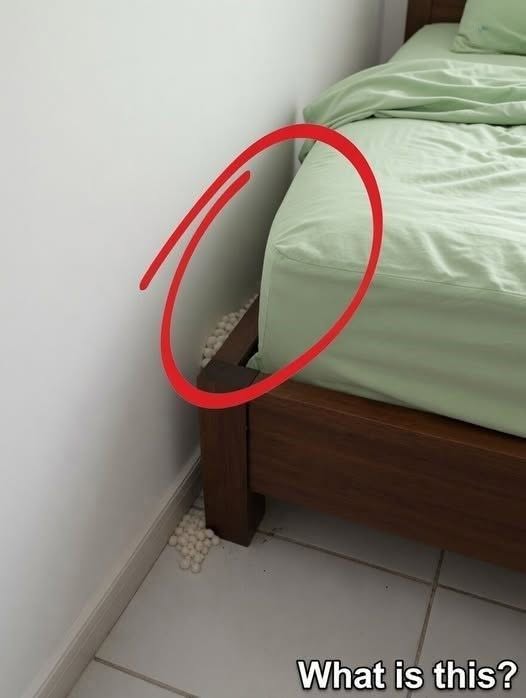
I walked into my bedroom, tossed my bag on the chair, and froze. There, nestled beside the leg of my bed frame, were two small, white, oval objects. They were about the size of a grape, smooth, and slightly leathery in appearance.
My mind raced through possibilities. Had my kids left candy on the floor? No, too big. Were they some kind of strange pebble? No, too uniform.
My heart started pounding. Was it something dangerous? Something alive?
I knelt down for a closer look. The objects were pale white, almost translucent in some light. They had a soft, flexible texture—not hard like an eggshell, but not squishy like a gel capsule either.
I called my husband. “Come here. Now.”
He walked in, saw me kneeling on the floor, and raised an eyebrow. “What’s going on?”
“I don’t know. Look.”
He knelt beside me. We stared at the two strange objects in silence.
“Are those… eggs?” he asked.
“I think so.”
“From what?”
“I don’t know.”
We called our neighbor, who happened to be a biology teacher. She came over, took one look, and smiled.
“Those are lizard eggs,” she said. “Probably from a house gecko. They’re harmless.”
Harmless. Lizards. In my bedroom.
I didn’t know whether to laugh or scream.
But that moment—startling, strange, and ultimately beautiful—became one of the most memorable evenings of my life.
Let me tell you the whole story.
🔍 The Discovery: What Those Strange White Objects Really Were
When you find unfamiliar objects in your home, it’s natural to feel uneasy. But in this case, the mystery had a gentle explanation.
Identifying Lizard Eggs:
|
Characteristic
|
What to Look For
|
|---|---|
|
Size
|
0.5–1.5 inches long (about the size of a grape or small jellybean)
|
|
Color
|
White, pale cream, or slightly translucent
|
|
Texture
|
Soft, leathery, flexible—not hard like bird eggs
|
|
Shape
|
Oval or slightly elongated; sometimes slightly curved
|
|
Arrangement
|
Often laid in small clutches (2–20 eggs, depending on species)
|
|
Location
|
Hidden, protected spots: under furniture, behind appliances, in wall crevices
|
💡 Key insight: Unlike bird eggs, reptile eggs have a leathery, pliable shell that allows for gas exchange while retaining moisture. This is why they feel soft to the touch.
🦎 The Backstory: How Lizard Eggs End Up in Your Home:
across walls and ceilings. We usually shooed them outside and thought nothing of it.
Apparently, one of them had decided that the corner of our bedroom—the warm, quiet corner beside the bed frame—was the perfect place to lay her eggs.
Why Lizards Choose Homes as Nurseries:
|
Factor
|
Why It Appeals to Lizards
|
|---|---|
|
Stable temperature
|
Homes maintain consistent warmth, ideal for egg development
|
|
Protection from predators
|
Indoor spaces offer safety from birds, snakes, and larger reptiles
|
|
Humidity control
|
Bathrooms, kitchens, and bedrooms often have the moisture levels reptiles prefer
|
|
Undisturbed locations
|
Behind furniture, under beds, or in closets provide privacy for nesting
|
|
Abundant food sources
|
Homes attract insects (flies, moths, ants), which feed adult lizards and hatchlings
|
From a lizard’s perspective, my bedroom wasn’t an invasion—it was prime real estate.
I couldn’t even be mad. It was actually kind of impressive.
🤝 What We Did Next: The Right Way to Handle Reptile Eggs
If you ever find reptile eggs in your home, here’s what you should know—and what you should do.
Step 1: Identify the Species (If Possible)
Most house lizards are harmless and beneficial:
- House geckos: Small, nocturnal, eat insects; common in warm climates
- Anoles: Green or brown, diurnal, often found on walls and plants
- Skinks: Smooth-scaled, fast-moving, often found in gardens but may wander indoors
✅ Action: Take a clear photo and consult a local wildlife expert, herpetological society, or extension office for identification.
Step 2: Decide Whether to Move the Eggs
Leave them if:
- The location is safe (low traffic, away from pets, not likely to be disturbed)
- You can cordon off the area temporarily
- You’re comfortable sharing your space during incubation
Move them only if:
- The eggs are in a high-risk location (near pets, children, or heavy foot traffic)
- The area is prone to cleaning chemicals, extreme temperatures, or accidental crushing
⚠️ Critical warning: Reptile eggs are sensitive to orientation. Rotating them can kill the developing embryo. If you must move them, mark the top of each egg with a soft pencil before picking them up, and keep them in the same position during transfer.
Step 3: Create a Safe Incubator (If Needed)
If relocation is necessary:
- Use a small, ventilated container (plastic deli cup with air holes works well)
- Line the bottom with damp (not wet) vermiculite, sphagnum moss, or paper towels
- Place eggs gently in the container, maintaining their original orientation
- Keep at room temperature (70–80°F / 21–27°C), away from direct sunlight
- Check moisture levels weekly; mist lightly if the substrate dries out
Step 4: Practice Patience
Reptile eggs can take weeks to months to hatch, depending on:
- Species
- Temperature (warmer = faster development)
- Humidity levels
✅ Action: Mark your calendar to check on the eggs weekly. Avoid frequent handling, which can stress developing embryos.
🌱 The Waiting Game: What Happened Next
We decided to leave the eggs where they were. We blocked off the area with a small cardboard barrier to prevent accidental disturbance. We checked on them every few days.
For weeks, nothing happened. I started to forget they were there.
Then, on a warm Saturday morning, my husband called me into the bedroom. “Come see this.”
Two tiny lizards—each no bigger than my pinky finger—were sitting beside the empty eggshells. They were dark, almost black, with tiny translucent bellies. They looked up at us with enormous eyes, then scurried under the bed.
We never saw them again. But every time I see a small gecko on the wall, I wonder if it’s one of them.
🏡 How to Prevent Lizard Eggs in Your Home (If You Prefer)
If you’d rather not share your bedroom with reptile nurseries, there are humane, effective ways to discourage lizards from nesting indoors.
Prevention Strategies:
|
Method
|
How It Works
|
Notes
|
|---|---|---|
|
Seal entry points
|
Close gaps around windows, doors, pipes, and foundations
|
Use caulk, weatherstripping, or mesh screens
|
|
Reduce insect populations
|
Fewer bugs = less food for lizards
|
Use natural pest control; keep food sealed
|
|
Remove clutter
|
Eliminate hiding spots where lizards might nest
|
Store items off the floor; keep closets organized
|
|
Control humidity
|
Lizards prefer moist environments
|
Use dehumidifiers in damp areas; fix leaks promptly
|
|
Use natural deterrents
|
Certain scents repel lizards
|
Peppermint oil, garlic, or coffee grounds near entry points (reapply regularly)
|
|
Install outdoor lighting strategically
|
Bright lights attract insects, which attract lizards
|
Use yellow “bug lights” or motion-sensor fixtures away from entry points
|
🌿 Humane reminder: Most house lizards are beneficial predators that eat mosquitoes, flies, and other pests. If you can coexist peacefully, many people choose to welcome them as natural pest control.
❓ Frequently Asked Questions About Lizard Eggs
Q: How can I tell if an egg is a lizard egg?
A: Lizard eggs are typically small (0.5–1.5 inches), white or pale, and leathery (not hard like bird eggs). They are often laid in clutches of 2–20, depending on the species. If unsure, consult a local wildlife expert.
A: Lizard eggs are typically small (0.5–1.5 inches), white or pale, and leathery (not hard like bird eggs). They are often laid in clutches of 2–20, depending on the species. If unsure, consult a local wildlife expert.
Q: Are lizard eggs dangerous to humans or pets?
A: No. Lizard eggs pose no threat to people or pets. The mother is usually not protective of her eggs and will not defend them. However, keep pets from disturbing the eggs, as this can harm the developing embryos.
A: No. Lizard eggs pose no threat to people or pets. The mother is usually not protective of her eggs and will not defend them. However, keep pets from disturbing the eggs, as this can harm the developing embryos.
Q: Do I need to worry about the mother lizard?
A: Most house lizards (like geckos) do not guard their eggs after laying them. The mother will likely not return. You can safely observe or relocate the eggs without worrying about an aggressive parent.
A: Most house lizards (like geckos) do not guard their eggs after laying them. The mother will likely not return. You can safely observe or relocate the eggs without worrying about an aggressive parent.
Q: How long does it take for lizard eggs to hatch?
A: Incubation time varies by species and temperature:
A: Incubation time varies by species and temperature:
- House geckos: 30–90 days
- Anoles: 30–60 days
- Skinks: 60–120 days
Warmer temperatures generally speed up development.
Q: What do baby lizards eat?
A: Hatchling lizards eat tiny insects: fruit flies, pinhead crickets, aphids, and springtails. If you’re caring for hatchlings temporarily, you can purchase appropriately sized feeder insects from pet stores.
A: Hatchling lizards eat tiny insects: fruit flies, pinhead crickets, aphids, and springtails. If you’re caring for hatchlings temporarily, you can purchase appropriately sized feeder insects from pet stores.
Q: Can I keep the baby lizards as pets?
A: While possible, it’s generally best to let wild lizards remain in their natural habitat. They have specific care requirements, and releasing captive-raised reptiles can harm local ecosystems. If you’re interested in reptile keeping, consider adopting from a reputable breeder or rescue.
A: While possible, it’s generally best to let wild lizards remain in their natural habitat. They have specific care requirements, and releasing captive-raised reptiles can harm local ecosystems. If you’re interested in reptile keeping, consider adopting from a reputable breeder or rescue.
Q: What if I accidentally break a lizard egg?
A: If an egg is cracked or damaged, the embryo likely will not survive. Gently dispose of the contents and clean the area. Learn from the experience for next time—and remember, nature includes both success and loss.
A: If an egg is cracked or damaged, the embryo likely will not survive. Gently dispose of the contents and clean the area. Learn from the experience for next time—and remember, nature includes both success and loss.
Q: Are all lizard eggs white?
A: Most are white or pale, but some species lay eggs with slight color variations (cream, light pink, or faint speckling). Texture (leathery vs. hard) is a more reliable identifier than color alone.
A: Most are white or pale, but some species lay eggs with slight color variations (cream, light pink, or faint speckling). Texture (leathery vs. hard) is a more reliable identifier than color alone.
Q: Can lizard eggs hatch indoors if left undisturbed?
A: Yes! If temperature and humidity are suitable, eggs can successfully hatch inside homes. Many people have witnessed this quiet miracle without ever intervening.
A: Yes! If temperature and humidity are suitable, eggs can successfully hatch inside homes. Many people have witnessed this quiet miracle without ever intervening.
💙 A Compassionate Closing Thought
If you’re reading this because you’ve found strange eggs in your home—or because you’re simply curious about the hidden lives sharing your space—please know:
🦎 Surprise is not the same as danger. Finding something unexpected doesn’t mean it’s a threat. Pause. Observe. Learn.
🦎 Coexistence is possible. We share our homes with countless creatures—spiders in the corners, birds on the roof, lizards on the walls. Most mean us no harm.
🦎 Wonder is a choice. You can see a lizard egg as a problem to solve—or as a small miracle unfolding on your bedroom floor. Both perspectives are valid.
🦎 Kindness costs nothing. Whether you choose to protect the eggs, relocate them gently, or simply step around them, your compassion matters.
🦎 Coexistence is possible. We share our homes with countless creatures—spiders in the corners, birds on the roof, lizards on the walls. Most mean us no harm.
🦎 Wonder is a choice. You can see a lizard egg as a problem to solve—or as a small miracle unfolding on your bedroom floor. Both perspectives are valid.
🦎 Kindness costs nothing. Whether you choose to protect the eggs, relocate them gently, or simply step around them, your compassion matters.
Finding lizard eggs beside my bed was startling. But it was also a reminder that I am not the only inhabitant of my home.
I am sharing this space with other living beings.
And if I’m lucky, sometimes I get to witness the miracle of new life—right there on my bedroom floor.
Nature doesn’t ask for permission. It simply persists. And sometimes, in the quiet corners of our lives, it invites us to pause, look closer, and remember: we are part of a much larger, much more wonderful world.
🧭 The Bottom Line
Discovering lizard eggs at home is surprising but usually harmless—and often a beautiful opportunity to witness nature up close.
Remember: 🦎 Lizard eggs are small, white, leathery, and typically laid in hidden, warm spots
🤝 Most house lizards are beneficial, harmless, and not protective of their eggs
🛡️ If needed, eggs can be relocated safely—with care to maintain orientation
🌱 Prevention focuses on sealing entry points, reducing insects, and controlling humidity
💙 Coexistence is a choice; wonder is a gift; kindness costs nothing
🤝 Most house lizards are beneficial, harmless, and not protective of their eggs
🛡️ If needed, eggs can be relocated safely—with care to maintain orientation
🌱 Prevention focuses on sealing entry points, reducing insects, and controlling humidity
💙 Coexistence is a choice; wonder is a gift; kindness costs nothing
However you choose to respond to a surprise discovery, may you move through it with curiosity instead of fear, compassion instead of frustration, and openness to the quiet miracles that unfold in the spaces we call home.
Have you ever found lizard eggs or other unexpected wildlife in your home? How did you handle it? Share your stories and tips respectfully in the comments below.